
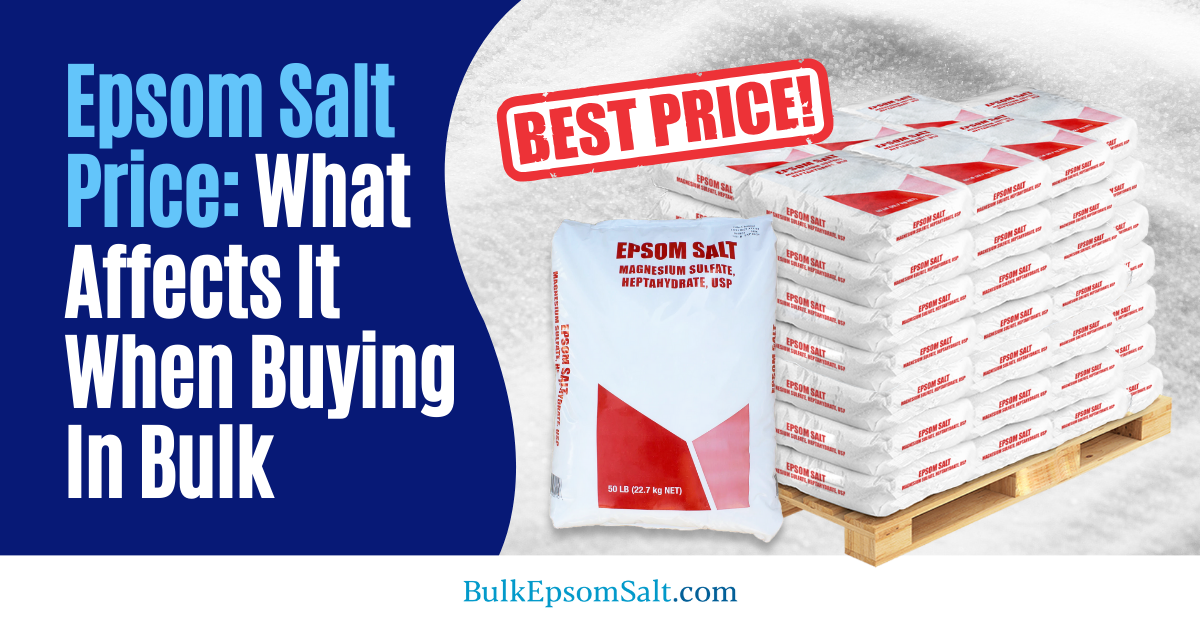
When running a business that uses epsom salt regularly, understanding what drives epsom salt price is important.
Whether you’re in float therapy, cosmetics, or agriculture, these costs can add up fast. Knowing what affects pricing helps you plan better and choose a reliable supplier that fits your budget.
Below, we’ll go over the main factors that influence bulk pricing and what you should consider when comparing suppliers.
USP Grade Vs. Technical Grade Epsom Salt
One of the biggest factors that affects the price of epsom salt is its grade. You’ll often see two main types on the market: USP (United States Pharmacopeia) Grade and technical grade.
The first meets strict standards for purity and safety. It’s the same quality used in personal care products, epsom salt float tanks, and wellness applications.
 Since it undergoes more thorough testing and quality control, it generally costs more.
The added expense, however, ensures that the salt is safe for use on the body and suitable for regulated industries.
Technical grade epsom salt, on the other hand, is commonly used in agriculture, cleaning, or industrial applications.
It’s still magnesium sulfate heptahydrate, but it doesn’t go through the same certification process, which makes it cheaper but not appropriate for uses involving direct skin contact or medical-related products.
Before deciding which to buy, think about your end use.
A lower price might be appealing, but if you need a product that meets certain safety standards, USP Grade—which is what we offer at BulkEpsomSalt.com—is worth the investment.
Call or text us to order a full, half, or custom pallet size today.
How The Source And Processing Affect Cost
The source of epsom salt also influences how much you’ll pay. Some suppliers source directly from local producers, while others import from overseas.
Each option has its advantages and trade-offs.
Epsom salt mined and packaged in the US usually has more consistent quality control and shorter shipping distances.
Imported salt can sometimes be cheaper at the product level, but international freight and longer lead times can add hidden costs.
One more thing to consider is processing and packaging. Some suppliers sell epsom salt as raw bulk material, while others repackage it into smaller bags or pallets.
Clean processing facilities and proper packaging help maintain the salt’s purity and prevent clumping during storage.
Those details may slightly increase the cost per pound, but they protect your investment in the long run.
When you’re comparing suppliers, don’t just look at the base price. Ask where the salt comes from and how it’s processed.
The answers often reveal why prices differ and help you gauge overall value.
Shipping And Handling Costs For Bulk Orders
Shipping is another key factor that affects epsom salt cost.
Because it’s a heavy product, transportation costs can make up a large part of your total expense. How far the shipment travels and what type of order you place both matter.
If you’re located near a supplier’s warehouse or distribution center, you can usually save on freight or arrange for pickup.
But if you’re across the country, expect higher shipping fees, especially for full pallet or multi-pallet orders.
Some suppliers include freight in their quote, while others don’t. Always clarify whether the price you’re given is FOB (freight on board) or delivered.
A quote that looks low at first might end up being more expensive once you add in transportation.
Also, note how suppliers handle orders. Reputable suppliers pack their salt securely, often on stretch-wrapped pallets to prevent damage.
While this adds minor handling costs, it reduces the risk of product loss, which can be much more costly to your business.
For instance, we at BulkEpsomSalt.com protect epsom salt bags with corner guards and cardboard on all sides and secure pallets with a wrapping machine.
If you’re looking into freight options, try comparing different delivery methods.
LTL (less-than-truckload) shipping works well for smaller quantities, while full truckload shipments usually offer better rates per pound for large orders.
Why Documentation And Certification Matter
When you buy in bulk, proper documentation adds real value.
 For businesses in regulated industries, like float therapy and cosmetics, certifications are not just nice to have—they’re essential.
A reliable supplier should be able to provide a Certificate of Analysis or COA that verifies the product’s purity and composition.
This confirms that the epsom salt meets industry standards and has been tested for contaminants.
Having documentation on hand also helps if you ever need to verify product quality with clients, auditors, or health departments. It gives your business a layer of credibility and protection.
Some suppliers charge slightly more because they test every batch and keep detailed records. While this might raise the epsom salt cost, it ensures consistency and peace of mind.
In contrast, buying from suppliers that skip these steps could lead to inconsistencies or even compliance issues later on.
Always ask your supplier about documentation and quality assurance. A transparent supplier will gladly provide the necessary paperwork and explain their process.
What To Look For When Comparing Epsom Salt Suppliers
When figuring out where to buy epsom salt in bulk, it’s important to think beyond the sticker price.
Start by listing your must-haves—purity level, intended use, packaging preference, and delivery needs. Then compare quotes side by side.
Here’s a quick checklist to guide your comparison:
- Grade And Purity: Does it meet industry standards?
- Source And Processing: Where is it produced, and how is it handled?
- Documentation: Can they provide a COA or proof of quality?
- Shipping: Are freight costs included in the quote?
- Flexibility: Do they offer different order sizes or pickup options?
Taking the time to check these points helps you avoid unexpected costs and ensures you’re working with a supplier that values consistency as much as you do.
Final Thoughts On Epsom Salt Price And Value
When comparing suppliers, remember that the lowest price doesn’t always mean the best deal.
The true cost includes product quality, reliability, and the support you get after placing your order.
A dependable supplier provides transparency on grade, origin, and documentation, helping you make informed decisions for your business.
If you’ve ever wondered, “How much does epsom salt cost?” the answer depends on what you need it for and where it comes from.
By understanding what drives the epsom salt price, you’ll be able to buy smarter and build stronger relationships with suppliers that meet your quality and budget expectations.
Call or text us at BulkEpsomSalt.com today to place an order or request a freight quotation.
