
Ordering wholesale epsom salt is a smart way to meet your business’s production or retail needs.
But before the shipment arrives, it helps to understand what happens behind the scenes—from pallet sizing and delivery to storage.
Knowing the logistics will make receiving large orders of epsom salt smooth, safe, and efficient.
Understanding Pallet Sizes For Bulk Deliveries
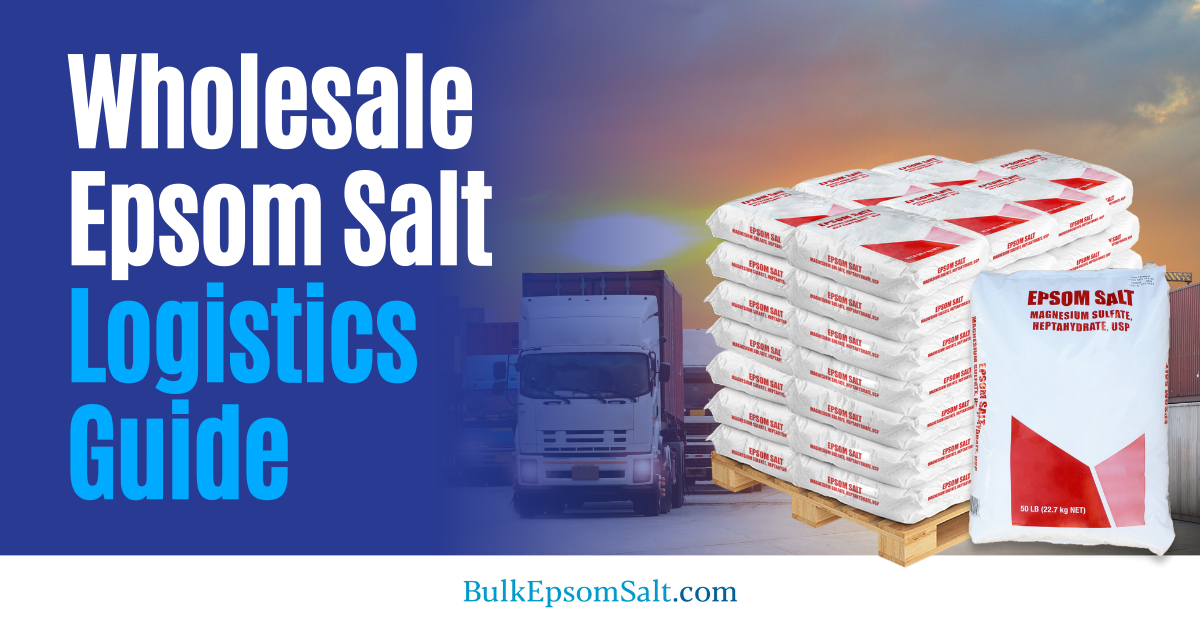
When you order in large quantities, your epsom salt won’t come in small boxes—it’s shipped on pallets. Pallets are flat platforms designed to carry stacked products securely during transport.
For epsom salt, this setup ensures that bags stay stable, easy to move, and protected from damage.
 Standard pallets typically measure about 40 by 48 inches. However, not all orders are the same, and flexibility can be important for businesses with limited storage or unique space layouts.
That’s why it’s important to partner with a supplier that offers full and half pallets, and even custom pallet configurations, which we at BulkEpsomSalt.com do.
A full pallet is ideal for high-volume users like float spas, cosmetics manufacturers, or equine care centers. It helps maximize shipping efficiency and minimize handling time.
A half pallet, on the other hand, suits smaller operations or those testing a new product line.
Custom pallet configurations are also available for businesses with specific storage requirements.
You might request certain bag counts per pallet or adjusted stacking to fit a narrow warehouse aisle.
Discussing your preferred configuration before finalizing your order ensures the delivery matches your capacity and setup.
Call or text us to place an order or request a freight quotation. Let us know how many bags you need, and we’ll take care of the rest.
Freight Shipping Options For Wholesale Orders
Once your order is packed and palletized, the next step is getting it to your location.
Wholesale orders of magnesium sulphate epsom salt are shipped via freight carriers instead of standard parcel delivery.
Freight shipping is designed for heavy or oversized loads and involves transporting goods on pallets using trucks equipped for larger capacities.
There are two common freight options: LTL (less-than-truckload) and FTL (full-truckload).
– LTL shipping is best when your order doesn’t fill an entire truck. Multiple customers share the same truck, and shipping costs are divided among them.
This option can be more affordable but might involve slightly longer delivery times, as the carrier makes multiple stops.
– FTL shipping means your order fills a whole truck, or you’ve booked the entire space.
It’s faster and ideal for large or time-sensitive deliveries, as the truck travels directly to your destination without intermediate stops.
Your choice depends on order volume, delivery timeline, and budget.
Most businesses prefer to discuss these options with the supplier before confirming their shipment to ensure it fits their operational needs.
Preparing For Delivery Day
When the truck arrives, being prepared helps everything go smoothly. Freight trucks usually offload from the back, so you’ll need to consider how the delivery will be received.
Here are key points to keep in mind:
1. Access For Trucks: Make sure your delivery area can accommodate large vehicles.
Freight trucks are much bigger than standard delivery vans and need enough space to turn, park, and unload safely.
2. Offloading Equipment: Depending on your setup, you may need a forklift, pallet jack, or loading dock.
Some freight carriers offer liftgate service (a mechanical platform that lowers pallets to the ground), which is helpful if you don’t have warehouse equipment on-site.
3. Receiving Staff: Have at least one or two people available to assist with unloading and inspecting the shipment.
Check for any visible damage to pallets or bags before signing the delivery receipt.
4. Clear Pathway: Prepare a designated space for offloading to prevent confusion or blocked aisles.
Keeping this area clean and dry helps protect your goods from contamination or moisture.
Taking these steps ensures your delivery is received safely and efficiently without unnecessary delays or handling issues.
How To Store Bulk Epsom Salt Safely
Once your shipment is offloaded, proper storage becomes the next priority. Epsom salt is hygroscopic, meaning it naturally absorbs moisture from the air.
If stored incorrectly, it can clump or harden, making it harder to handle and use. Here are a few simple but effective storage practices:
- Keep it dry: Store epsom salt in a cool, low-humidity area. Avoid basements or outdoor sheds where moisture may accumulate.
- Use pallets or shelving: Don’t place bags directly on the floor. Elevate them on pallets to prevent moisture transfer from the ground.
- Cover when necessary: If your facility isn’t fully climate-controlled, use protective plastic sheets or tarps to reduce exposure to humidity.
- Rotate stock: Practice first-in, first-out (FIFO) rotation to ensure older stock is used before newer deliveries. This keeps your inventory fresh and manageable.
When stored correctly, magnesium sulfate epsom salts remain free-flowing and ready for use.
Whether you’re working with an epsom salt 50 lb bag or an entire pallet, consistent storage practices help maintain product quality.
Streamlining Your Supply Chain
 Once you’re familiar with the logistics, the process becomes much easier to manage. Establishing a good relationship with your supplier helps keep communication open.
You’ll know what to expect for every shipment, from delivery timelines to documentation such as a Certificate of Analysis or COA, which we at BulkEpsomSalt.com provide upon request.
Regularly reviewing your order schedule also helps prevent supply gaps. For instance, if your busy season falls during the holidays, plan shipments a few weeks earlier.
Doing so ensures you always have enough stock without last-minute stress or extra shipping fees.
Making Wholesale Deliveries Work For You
Understanding the logistics of receiving large orders doesn’t just make deliveries easier—it also supports smoother operations overall.
From choosing the right pallet size to ensuring proper storage, every step contributes to product quality and efficiency.
By taking time to plan your freight delivery, prepare your receiving area, and store your stock correctly, you can make wholesale epsom salt shipments a routine part of your workflow instead of a challenge.
And with options for full, half, and custom pallets, it’s easy to order just what your business needs—when you need it.
Whether you’re managing a float spa, cosmetics brand, or equine care facility, the key is preparation.
Once your systems are in place, every delivery will arrive ready to support your production and keep your business running smoothly.
We at BulkEpsomSalt.com have you covered. Call or text us to partner and place an order today.
