
When a business uses Epsom salt every day, even a small amount of waste can add up. A little spilled product here, an opened bag stored incorrectly there, and suddenly you are paying for salt that never makes it into your finished product.
Reducing waste does not require a complicated system. In most cases, it comes down to better handling, storage, measuring, and ordering.
Start With How Your Team Handles Epsom Salt
 The first place to look is your production area.
How are bags opened? Are they being left open between batches? Does your team scoop directly from large bags, or do they transfer the salt into another container first?
Small habits can create unnecessary waste. Make sure employees know how to open bags carefully and close or secure them when they are not being used.
It also helps to keep the work area organized. When bags are stacked properly and tools have a designated place, there is less chance of knocking over a bag or spilling product during production.
Store Bulk Epsom Salt Properly
Storage can make a bigger difference than you might expect.
Epsom salt should be protected from moisture. When the product absorbs moisture, it can begin to clump, making it harder to measure and use efficiently.
Keep bags in a clean, dry storage area and avoid placing them where they could be exposed to water or excessive humidity.
Good storage is not just about protecting the product. It also helps your team work with a more consistent material from one production run to the next.
Measure Before You Mix
If your business makes bath salts, scrubs, or other products containing Epsom salt, accurate measuring matters.
Overfilling a batch may seem insignificant, but repeating that mistake across dozens or hundreds of batches can become expensive.
Use consistent measuring equipment and establish clear batch instructions. If several employees are involved in production, everyone should be following the same process.
That makes it easier to spot problems and understand where excess material is being used.
Pay Attention To Open Bags
It is easy to lose track of partially used bags.
Someone opens a new bag because the previous one appears nearly empty, while another employee later discovers there is still usable salt left. Over time, this can create unnecessary leftovers and confusion.
A simple first-in, first-out system can help. Use older opened inventory before opening new bags whenever practical.
Labeling opened bags with the date can make this even easier.
Order According To Real Usage
 Waste can also happen before the salt reaches production.
Ordering far more than your business can reasonably use ties up money and takes up valuable storage space. At the same time, ordering too little can lead to rushed purchases and higher shipping costs.
Review your actual usage before placing your next bulk order. Consider your production schedule, upcoming promotions, seasonal demand, and available storage.
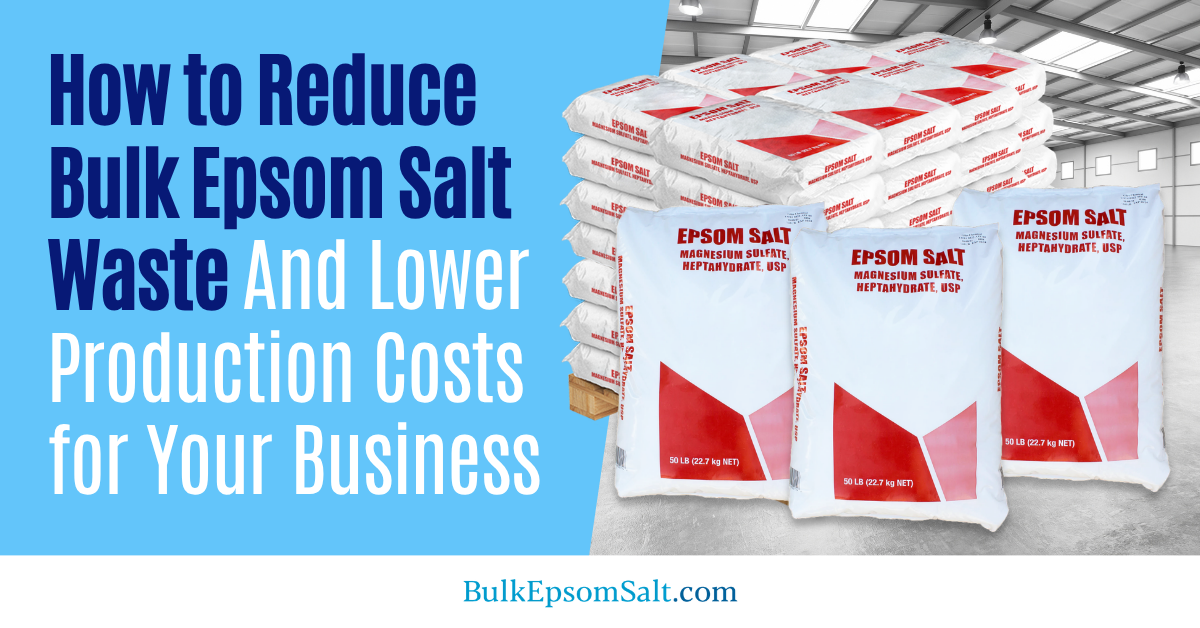
For some businesses, a 50-lb bag may be the right starting point. Growing operations may benefit from half or full pallets, depending on their usage.
A Better Approach To Bulk Epsom Salt
The goal is not simply to buy less Epsom salt. It is to use what you buy more effectively.
Careful handling, proper storage, accurate measuring, organized inventory, and smarter ordering can all reduce unnecessary loss.
When your team treats bulk Epsom salt as an important production material rather than just another supply, small improvements can make a noticeable difference to your costs.
That is good for your inventory, your workflow, and ultimately your bottom line. It also gives you clearer numbers when planning future orders and production schedules.

